€380
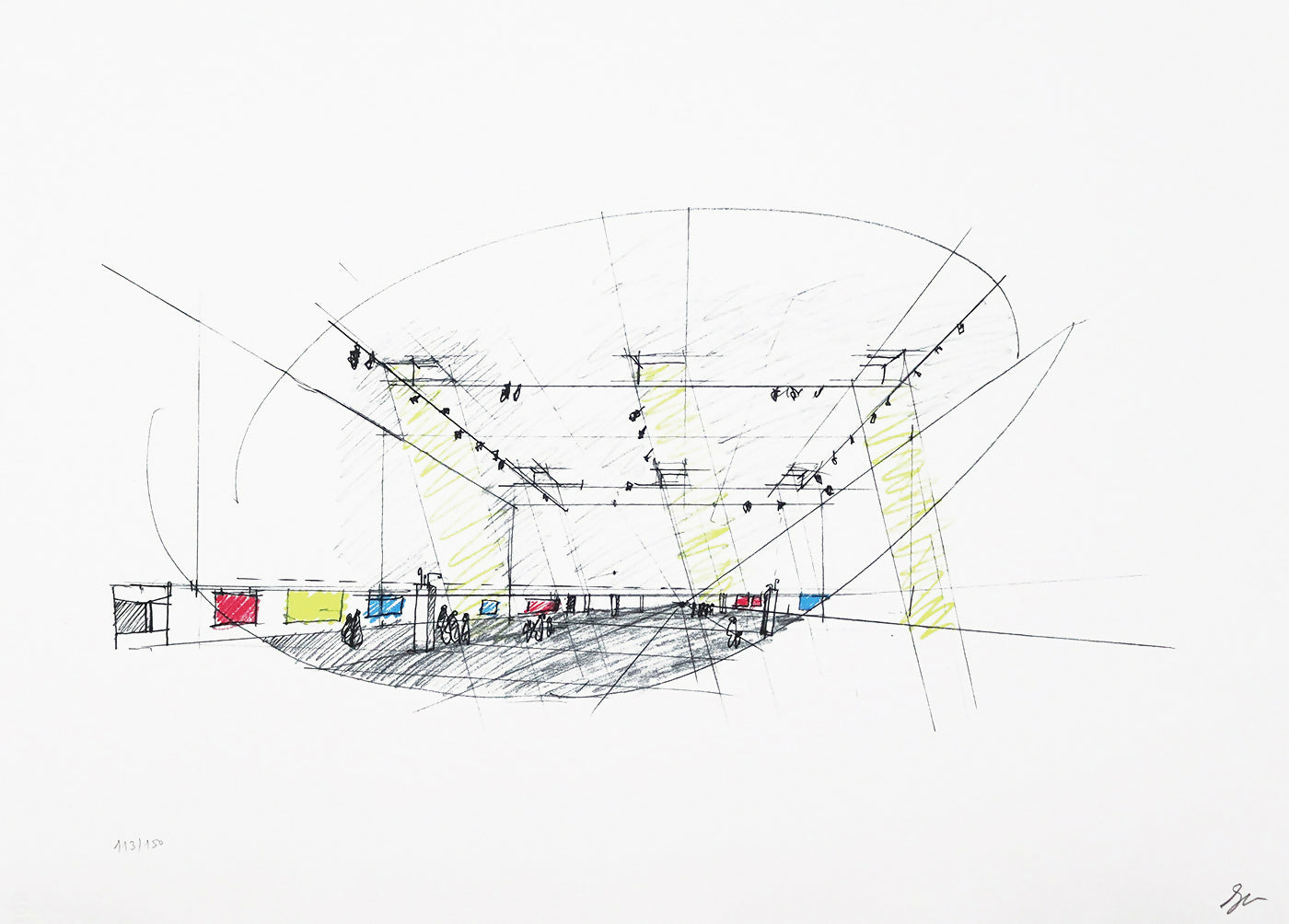
Regular price €345No. 93/150
- Técnica
- Screen printing · Paper
- Categoria
- Graphic Work
- Dimensão
- 70 × 50 cm
- Tema
- Architecture
- SKU
- 51753032024391
€380
Regular price €345No. 93/150
- Técnica
- Screen printing · Paper
- Categoria
- Graphic Work
- Dimensão
- 70 × 50 cm
- Tema
- Architecture
- SKU
- 51753032024391
Ver em cenário





Eduardo Souto de Moura (n. 1952, Porto) é um dos mais prestigiados arquitetos portugueses, galardoado com o Prémio Pritzker em 2011, o reconhecimento máximo da arquitetura mundial. Formou-se na Escola de Belas-Artes do Porto, em Portugal, onde foi aluno e, mais tarde, colaborador de Álvaro Siza Vieira, figura que influenciou profundamente o seu rigor conceptual. A sua obra é frequentemente associada à "Escola do Porto", caracterizando-se por um minimalismo que não abdica da materialidade, onde o uso do betão, da pedra e do ferro estabelece um diálogo tenso e harmonioso com a paisagem natural e a história do lugar.
A sua carreira é pautada por projetos que redefinem a arquitetura contemporânea, sendo o Estádio Municipal de Braga (2003) uma das suas obras mais icónicas, pela forma audaz como se integra numa encosta rochosa. Outros projetos de relevo incluem a Casa das Histórias Paula Rego, em Cascais, onde utiliza volumes geométricos e o pigmento vermelho para criar uma identidade marcante, e a reconversão do Convento das Bernardas, em Portugal. Além da sua prática em atelier, Souto de Moura é um académico respeitado, lecionando em instituições de prestígio na Suíça, Itália e nos Estados Unidos da América, consolidando um legado que equilibra a funcionalidade moderna com uma sensibilidade poética intemporal.
Precisa de ajuda?


 Telefone
Segunda a Sexta, 09:30 - 19:00 GMT +1
+351 934 239 608 (chamada para rede móvel nacional)